Copyright ©2026. All Rights Reserved | Design & Developed By Excel Range Media .
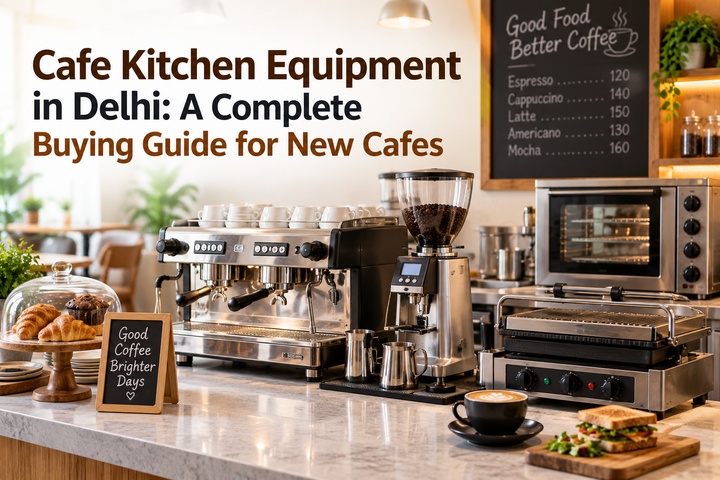
Opening a new café in Delhi is exciting, but setting up the kitchen requires careful planning. From brewing coffee and preparing snacks to storing ingredients and maintaining hygiene, the right equipment can directly affect your café’s speed, quality and operating costs. Many new café owners make the mistake of buying equipment based only on price, without considering capacity, space, energy consumption or maintenance requirements. A better approach is to understand your menu and daily workflow first, then select equipment that matches your actual requirements. Whether you are comparing restaurant kitchen equipment or exploring the best catering supplies, this guide will help you make practical buying decisions for your new café.
Before purchasing any equipment, prepare a basic list based on your menu. A coffee-focused café will have very different requirements from a café serving pizzas, burgers, pasta and baked products.
Consider:
Buying too much equipment can waste valuable space and capital, while buying undersized equipment can slow down service.
A functional café kitchen generally requires equipment for preparation, cooking, refrigeration, storage and cleaning.
Cooking Equipment
When comparing restaurant cooking equipment, focus on cooking capacity, temperature control, durability and ease of cleaning rather than simply choosing the cheapest option.
Preparation equipment helps staff work faster and maintain consistency. Chopping boards, food processors, mixers, blenders, vegetable cutters and stainless-steel work tables can make everyday preparation more efficient.
For cafés serving beverages, commercial blenders, coffee grinders and suitable beverage preparation equipment may also be essential.
Proper storage protects ingredients and reduces food wastage. Depending on your requirements, consider:
Choose refrigeration capacity according to your purchasing and production cycle. Overcrowding a refrigerator can affect air circulation and cooling efficiency.
A few practical checks can prevent expensive mistakes.
1. Match Equipment With Your Menu
Do not purchase equipment simply because another successful café uses it. Identify what your kitchen actually needs. For example, a café without fried foods may not need a large commercial fryer.
2. Check Capacity
Equipment should comfortably handle your expected workload during busy hours. A small oven may work initially but become a bottleneck when customer orders increase.
3. Consider Kitchen Layout
Measure doors, counters and available floor space before ordering. Leave enough room for staff movement, ventilation and servicing.
4. Compare Operating Costs
Look beyond the purchase price. Electricity or gas consumption, replacement parts, cleaning and servicing can significantly influence the total cost of ownership.
Selecting dependable restaurant equipment suppliers is as important as selecting the equipment itself. A supplier should be able to provide clear specifications, warranty information and after-sales support.
Before placing an order, ask about:
For new businesses, responsive after-sales support can be particularly useful because kitchen downtime can affect daily operations.
Instead of spending the entire budget on cooking equipment, divide your investment across different categories.
| Category | What to Consider |
|---|---|
| Cooking | Menu, capacity and fuel type |
| Refrigeration | Storage volume and cooling efficiency |
| Preparation | Staff requirements and workflow |
| Storage | Dry goods and ingredient organisation |
| Cleaning | Hygiene and washing facilities |
| Beverage | Coffee, juice and other drink requirements |
Also keep some funds aside for installation, electrical work, ventilation, plumbing and unexpected requirements.
Large machines often receive most of the attention, but smaller items are equally important for daily operations. Knives, utensils, trays, food containers, serving tools, storage boxes and cleaning accessories should be included in your purchasing plan.
If you are purchasing in volume, exploring catering supplies wholesale can help you organise procurement for multiple categories at once. However, compare product quality and durability rather than choosing supplies based only on bulk pricing.
Setting up a professional café kitchen becomes easier when you have access to the right products and knowledgeable assistance. Studio Rajsi can help businesses evaluate their kitchen requirements and choose suitable equipment and supplies according to their menu, space and operational needs.
From essential restaurant kitchen equipment to supporting best catering supplies, making informed purchasing decisions can help create a more efficient and organised workspace.
Choosing cafe kitchen equipment in Delhi requires more than comparing prices. Your menu, kitchen layout, expected workload, energy consumption, maintenance requirements and future expansion plans should all influence your decision. Reliable restaurant equipment suppliers can also make procurement, installation and after-sales support easier.
Start with the equipment your café genuinely needs, prioritise commercial-grade quality and build your setup around an efficient workflow. With careful planning and the right restaurant cooking equipment, your kitchen can support consistent service as your café grows.
Planning a new café kitchen? Connect with Studio Rajsi to explore suitable commercial kitchen equipment and catering supplies for your requirements.
A new café may need cooking equipment, refrigeration, preparation tables, storage racks, beverage equipment, utensils and cleaning supplies. The exact selection depends on the menu, kitchen size and expected customer volume.
Consider your menu, expected workload, available space, energy consumption, durability, safety features and maintenance requirements before selecting restaurant cooking equipment.
Yes. Commercial equipment is generally designed for frequent use and higher workloads. It can provide better durability and performance than equipment intended primarily for household use.
Compare suppliers based on product quality, specifications, warranty, installation, spare parts availability and after-sales support rather than considering price alone.
Wholesale purchasing can be practical when you need larger quantities of smallwares, utensils, containers or other supplies. Compare quality and pricing before placing a bulk order.


